


Overview:
President Surangel S. Whipps Jr. urged global leaders to ensure ocean technologies are affordable, reliable and accessible for small island nations during his keynote at the World Ocean Summit. Speaking on behalf of vulnerable island states, he stressed that equitable access to tools such as digital monitoring systems and drones is essential for protecting oceans and strengthening climate resilience.
By: Laurel Marewibuel
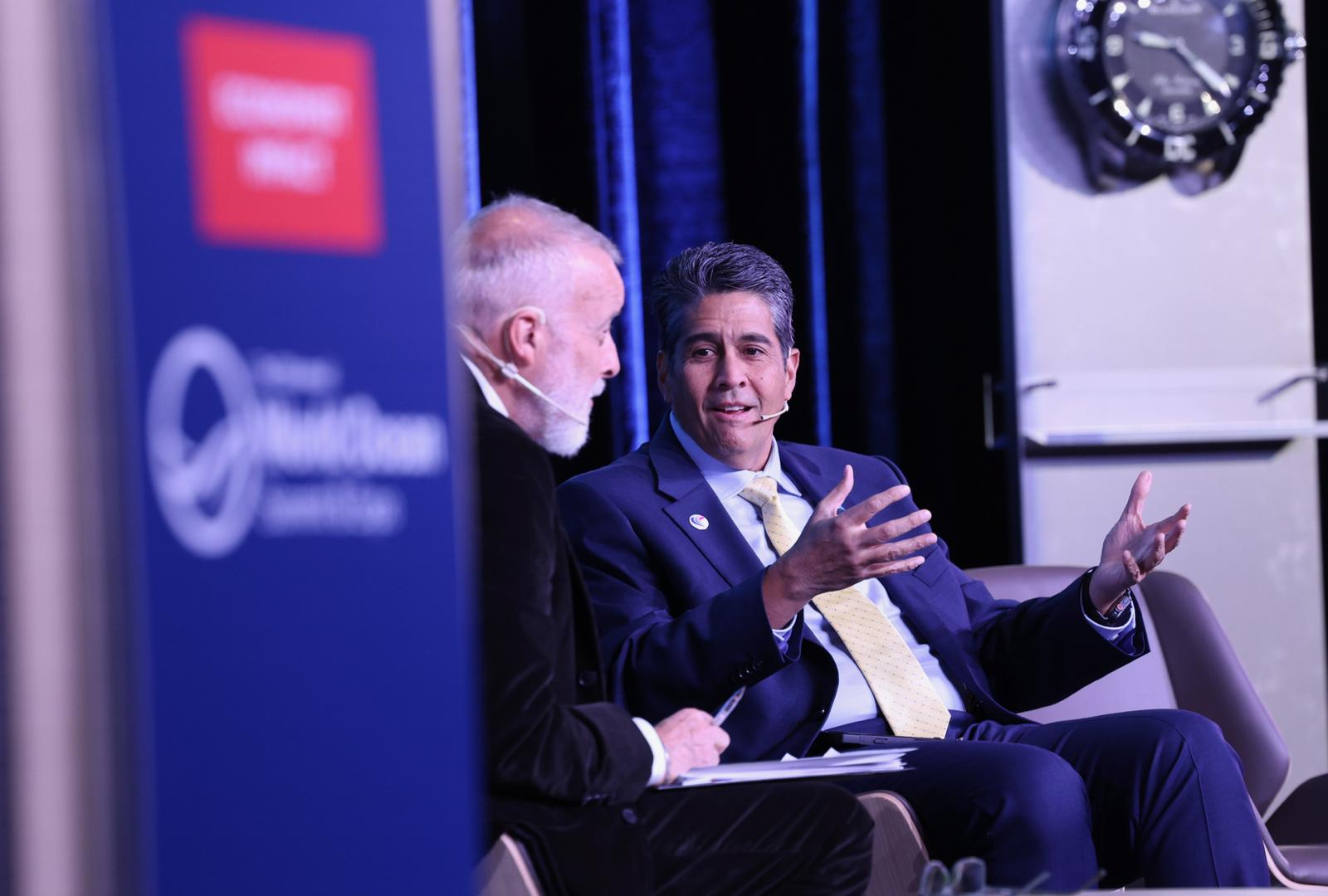
KOROR palau — President Surangel S. Whipps Jr. of Palau called Thursday for “sustained collaboration and equitable access to technology” as cornerstones of ocean governance, delivering the keynote at the 13th World Ocean Summit hosted by The Economist.
Speaking for Small Island Developing States battered by climate change, Whipps insisted tech solutions — like digital surveillance systems and drones — must be affordable, reliable, interoperable and paired with local capacity building. “These tools offer cost-effective, safer ways to monitor vast ocean spaces, freeing resources for critical climate adaptation,” he said, noting they reduce risks for fishers and enforcement teams patrolling exclusive economic zones.
Palau exemplifies stewardship: It ratified the Biodiversity Beyond National Jurisdiction (BBNJ) Agreement early, cementing its push for science-based protections in international waters. Whipps renewed calls for regional cooperation and a precautionary stance on deep-sea mining, warning of irreversible harm to marine ecosystems.
The address spotlights Palau’s rising profile ahead of hosting the Pacific Islands Forum Leaders Meeting in early September 2026. There, leaders will tackle ocean governance, climate resilience and Blue Pacific security amid rising seas and geopolitical tensions.
Whipps’ message resonates as nations negotiate High Seas Treaty implementation and grapple with overfishing, plastic pollution and warming oceans. For vulnerable islands, he said, tech equity isn’t optional — it’s survival. (Source: Office of the President, ROP)