


Overview:
A landmark climate opinion won by Pacific-led advocacy is entering a new phase, with regional leaders and civil society calling for the International Court of Justice ruling to be translated into concrete national and international action.
By: Summer Kennard
KOROR, Palau (August 31, 2026) – “It is the kind of tool that we need to now push even harder for climate justice,” Pacific Islands Students Fighting Climate Change Director Vishal Prasad said as Pacific leaders and climate advocates discussed how to turn the International Court of Justice’s landmark climate opinion into action.
The discussion took place during a Pacific Islands Forum Leaders Meeting side event, “The ICJ Climate Ruling and the Blue Pacific: Strengthening Our Collective Climate Leadership.”
The event focused on how Pacific countries can use the advisory opinion to strengthen climate policy, accountability and international negotiations.
The ICJ unanimously delivered its Advisory Opinion on the obligations of states in respect of climate change on July 23, 2025.
The opinion followed a campaign launched by Pacific students and advanced with the support of Pacific governments.
A year after the legal victory, speakers said the challenge now is ensuring the opinion is understood and used beyond the legal community.
Prasad said the more than 100-page opinion is difficult for many people to access and understand.
“If you look at the document, it is 100 plus pages. It’s not very accessible,” he said.
He said there is a need to explain the opinion in ways that allow communities, civil society groups and government officials to understand how it can support their work.
“We’re working very hard to try to bridge that gap so that it’s not an opinion just for the lawyers in the room, but it’s for everyone,” Prasad said.
Prasad said the opinion is already influencing climate-related cases outside the Pacific, including in South Africa, Canada, the Netherlands, France, Brazil and Costa Rica.
He said Vanuatu has also developed its national climate plan around the opinion, while other countries are considering incorporating its findings into national climate policies and legislation.
The international effort to advance the opinion has also gained momentum.
In May 2026, the U.N. General Assembly overwhelmingly adopted a resolution welcoming the advisory opinion and establishing a pathway to advance compliance with its findings.
The resolution received 141 votes and had 90 co-sponsors.
The Pacific’s next opportunities to advance the opinion include the U.N. High-Level Meeting on Sea-Level Rise in September, Pre-COP discussions in October and COP31 in November.
The U.N. secretary-general is expected to report to the General Assembly in 2027 on ways to advance compliance with the opinion.
Tina Stege, climate envoy for the Republic of the Marshall Islands and regional envoy for Oceania, said the opinion gives Pacific countries a stronger legal basis for positions they have advocated for decades.
“What the advisory opinion really has done is give us, again, a tool that we can and must all use,” Stege said.
But she warned that efforts to strengthen climate action will face resistance.
Stege said the opinion should be used as a “yardstick for accountability,” particularly on emissions reductions, fossil fuels and states’ climate obligations.
She also stressed the importance of maintaining the regional cooperation that helped secure the advisory opinion.
“If the PIF five years ago had not come together to endorse the call for an opinion, we would have never gotten an opinion,” she said.
The speakers said that same regional unity will be needed as Pacific countries move into the next phase of international climate negotiations.
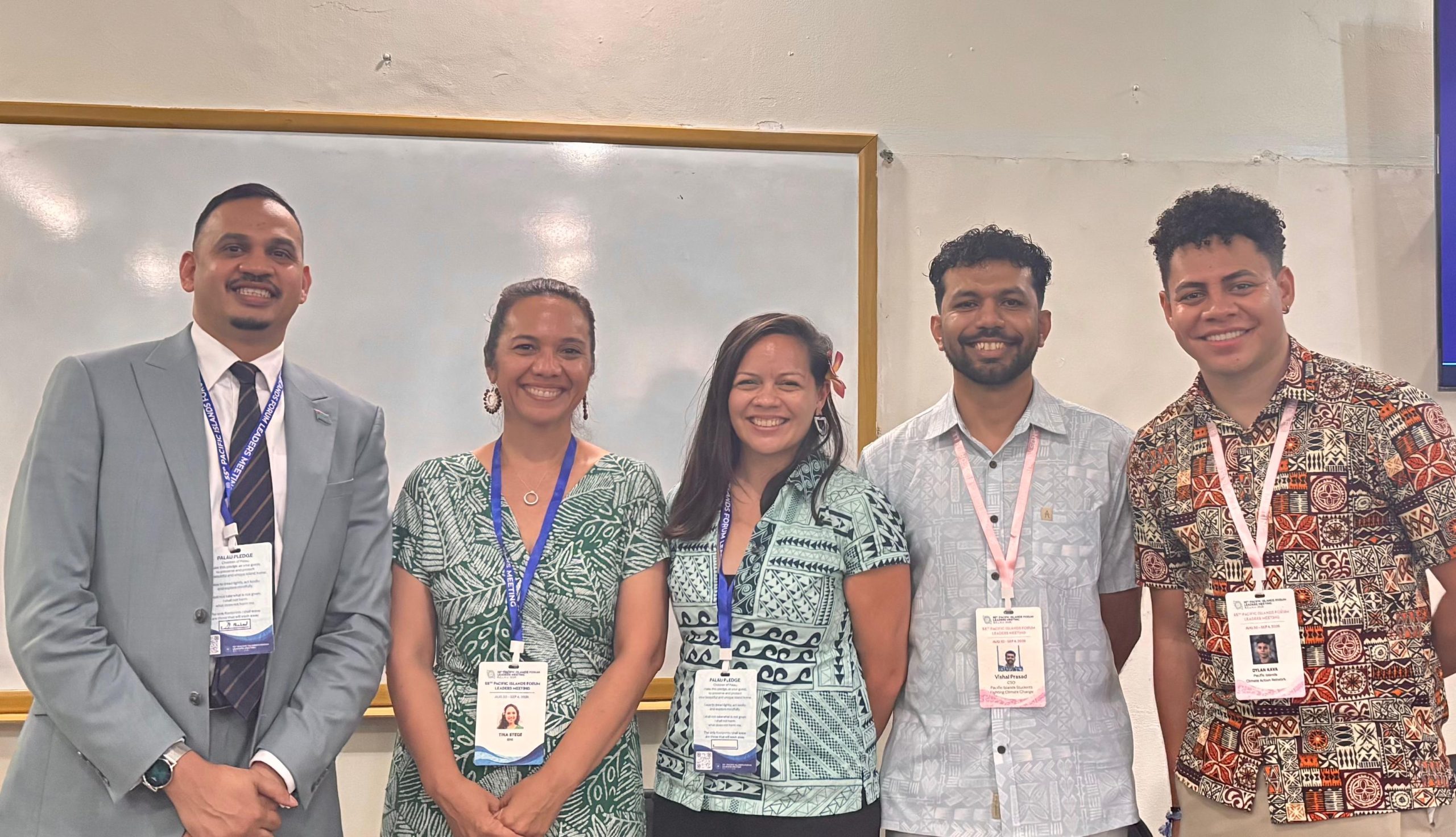
The panel featured Johana Gusman, ministerial adviser to the Government of Vanuatu; Stege; Dr. Sivendra Michael, Fiji’s permanent secretary for Environment and Climate Change; and Prasad. Dylan Kava moderated the discussion.
One attendee said the session was important because it provided an opportunity for dialogue while keeping pressure on governments.
“I enjoyed this topic and it is important to talk about, we have dialogue and discussions. Put pressure on the government,” the attendee said.
As Pacific countries prepare for Pre-COP and COP31, the attendee said the priority should be “more concrete action by the Pacific governments.”