


Overview:
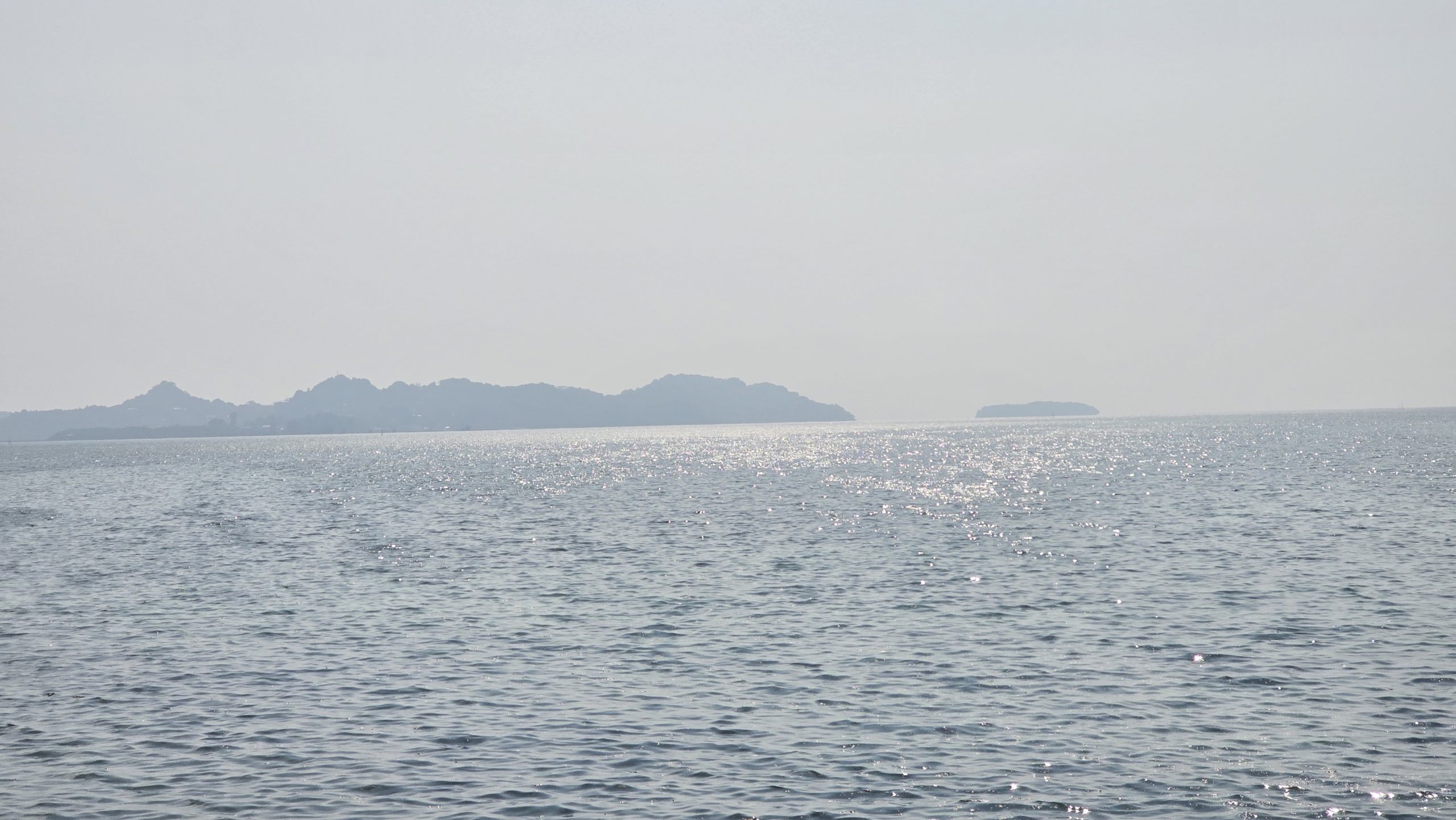
Palau is known for its exceptionally clean air, but an unusual haze has recently clouded the skies. Scientists at the Palau Atmospheric Observatory say new measurements are tracing the pollution to fires thousands of miles away — while warning that a potentially record-strength El Niño could intensify wildfire and climate impacts across the region.
By: L.N. Reklai
KOROR, Palau — The haze hanging over Palau in recent weeks is an unusual sight in a country scientists describe as having some of the cleanest air on Earth — and new measurements are helping explain where the pollution came from.

Researchers at the Palau Atmospheric Observatory say the recent haze is linked to smoke and other pollutants transported thousands of miles from fires in Australia, Indonesia and Papua New Guinea, with unusually dry conditions allowing the pollution to survive the journey to Palau.
The findings were presented during the first Climate Talks in Palau, organized by the German Embassy in Manila in cooperation with Germany’s Alfred Wegener Institute and Palauan partners. The event highlighted a decade of atmospheric research at the observatory, which began operations in 2016 on the Palau Community College campus.
Professor Markus Rex of the Alfred Wegener Institute said Palau sits in a particularly important location for understanding global climate processes.

The tropical Western Pacific is the western center of the El Niño-Southern Oscillation, one of the world’s most influential patterns of climate variability, Rex said.
He also emphasized a striking contrast: Palau and the surrounding tropical Western Pacific normally have exceptionally clean air.
“Palau and the tropical West Pacific has the cleanest air worldwide,” Rex said, explaining that the region serves as a benchmark for studying atmospheric chemistry in an environment with relatively little human-generated pollution.
The observatory’s decade of measurements, however, has also documented how pollution can occasionally reach Palau from distant regions.
Tracking the haze
Researchers recently began measuring black carbon, or soot, in Palau. The measurements provide a direct way to detect pollution associated with combustion, including wildfires.
At a rural monitoring site in Babeldaob, researchers recorded a baseline black carbon level of about 40 nanograms per cubic meter. When the instrument was moved to the observatory’s site near a road in Koror, measurements rose sharply.
The monthly average was about four times the Babeldaob baseline in June, six times higher in July and 14 times higher in August.
After accounting for a brief decline associated with rainfall, researchers said the August measurements reached as much as 22 times the Babeldaob baseline.
Researchers then traced the air masses arriving over Palau and found that the air measured on Aug. 20 had traveled from the eastern and northern coasts of Australia, across Indonesia and Papua New Guinea before reaching Palau from the southwest.
Satellite observations of fires along the route supported the connection between the transported air and regional wildfire activity.
The findings demonstrate how events occurring far beyond Palau can affect the island nation’s atmosphere.
Under normal conditions, trade winds bring air toward Palau from the east, across the vast Pacific Ocean, where there is relatively little human activity. Rainfall along the route also helps remove pollution particles before the air reaches Palau.
But when wind patterns shift, air can arrive from the southwest after passing over areas with extensive wildfire activity and other pollution sources.
That appears to be what happened during the recent haze episode.
El Niño raises concern
Scientists say the situation is particularly important as the Pacific moves toward an exceptionally strong El Niño.
Justus Notholt, a professor at the University of Bremen, said sea-surface temperatures in the central Pacific were already more than 2 degrees Celsius above normal in the latest measurements presented at the event.
Researchers are studying whether the developing El Niño could amplify pollution and greenhouse gas emissions across the region.
El Niño changes atmospheric and ocean conditions, contributing to dryness in some areas. Dry conditions can increase wildfire activity, producing smoke, carbon monoxide, carbon dioxide and other pollutants that can be transported over long distances.
Notholt said observations from previous El Niño events indicate that global warming may make these effects more pronounced, with higher and longer-lasting carbon dioxide levels associated with increased terrestrial emissions from fires.
The researchers are using measurements from Palau, satellite observations, ocean data and vegetation models to understand how El Niño affects carbon dioxide emissions.
Why Palau’s air matters globally
Palau’s exceptionally clean air makes it more than a local environmental asset. Scientists say it provides a rare baseline for measuring how the global atmosphere is changing.
Ground-level ozone concentrations around Palau are typically about 20 parts per billion — roughly half the levels observed in some locations in Germany, according to the presentation.
Researchers also described a broader “clean air pool” across the tropical Western Pacific, with Palau near its center.
The low pollution levels make it possible to detect changes that might be difficult to distinguish in heavily polluted environments.
But there is a paradox.
Because Palau has very low levels of hydroxyl radicals, a key chemical component that helps break down pollutants, some pollutants that enter the region can remain in the atmosphere longer.
Researchers estimated that sulfur dioxide, for example, can persist for nearly a month around Palau compared with about a week under normal tropical conditions. Methane and other atmospheric compounds can also have longer lifetimes in the region.
That means an area with exceptionally clean air can nevertheless be particularly vulnerable when pollution arrives.
The consequences extend beyond Palau.
The tropical Western Pacific is one of the major regions where air rises from the lower atmosphere into the stratosphere, where the ozone layer is located. Once there, air spreads globally and can influence atmospheric chemistry far beyond the Pacific.
The Palau Atmospheric Observatory uses high-altitude weather balloons, ground-based instruments and other equipment to monitor ozone, greenhouse gases, aerosols, black carbon and other atmospheric compounds.
Researchers have launched ozone-measuring balloons roughly every two weeks for the past decade, reaching altitudes of about 35 kilometers.
The data are shared through international scientific networks, helping researchers understand atmospheric circulation, climate variability and long-term climate change.
For Palau, the research also has an important policy dimension.
President Surangel Whipps Jr. has said the observatory helps Palau better understand and protect its environment while strengthening the country’s position in international climate negotiations.
German officials echoed that point, describing the observatory as an example of scientific cooperation between Palau and Germany and a contribution to global climate research.
As Palau confronts an unusual haze over an island nation renowned for clean air, scientists say the episode underscores a larger reality: air pollution does not respect national borders, and climate-driven changes in one part of the world can affect communities thousands of miles away.
For Palau, the observatory provides a front-row seat — and the scientific evidence needed to understand what is happening in the atmosphere above the Pacific.