


Overview:
The Pacific Freedom Forum (PFF) has marked World Press Freedom Day 2026 by reaffirming that a peaceful Pacific depends on strong, independent media and the protection of journalists. The Forum also announced a leadership transition, naming Tosi Tupua as incoming chair, while highlighting growing economic and political pressures facing newsrooms across the region.
PACIFIC FREEDOM FORUM
World Press Freedom Day 2026 Statement
May 4, 2026- On World Press Freedom Day 2026, the Pacific Freedom Forum (PFF) joins journalists, editors and media advocates across the world in observing UNESCO’s theme, “Shaping a Future of Peace.” UNESCO has framed this year’s observance as a critical moment to reaffirm freedom of expression as a foundation for peaceful, rights-respecting and resilient information societies. For Pacific communities, that message is immediate and practical. Peace depends on the public’s right to know, the safety of journalists, and the strength of independent media able to report truthfully without fear or interference.
PFF Chair Robert Iroga of the Solomon Islands, said the Pacific cannot build peaceful and resilient societies if journalists are silenced by intimidation, weak legal protections or financial pressure. “Peace is only possible where truth can be told, questions can be asked, and journalists can work without fear or interference,” Iroga said. “It is also important that we as Pacific media leaders can take our place in the Pacific 2050 conversations and be as bold and honest with media regionalism serving the public interest.”
“With that in mind, this year PFF is marking an important moment in its transition, especially as we note the economic and financial challenges which have delayed our plans to update the inaugural Press Freedom Index for the Pacific, which we launched from PINA in 2024,” said Iroga.
“Forging ahead, we will continue to strive for Pacific-led and Pacific-owned leadership of the press freedom advocacy we do. I am pleased to confirm the PFF rotation of leadership will now pass to Polynesia, and welcome Tosi Tupua of Samoa, as the new co-chair for Polynesia, and incoming chair”
Iroga paid tribute to co-chairs Leilani Reklai of Palau and Katalina Tohi of Tonga.
“It has been inspiring to see the resilience and passion of fellow chairs in this work. It’s not easy working in Pacific news, especially now, but we must lead and represent our industry at these levels, especially in the digital age,” he said.
PFF thanks Robert Iroga for his leadership and commitment in strengthening the Forum’s regional advocacy at a critical time for Pacific media freedom. Since taking on the chair, he has helped elevate Pacific concerns in regional and international press-freedom conversations and reinforced the Forum’s role as an Article 19 voice for Pacific journalists and communities.
The Forum also acknowledges the contribution of Polynesia co-chair Katalina Tohi of Tonga, a leader in independent news journalism whose work has served Pacific communities and advanced public-interest reporting across the region.
“I welcome the experience and leadership of the incoming chair as we prepare for PINA in Fiji and there is no doubt the Article 19 values of our network will be especially close to his heart. His international journalism experience plus legal expertise can only strengthen PFF’s continuing work to defend media freedom, accountability and freedom of expression in the Pacific.”
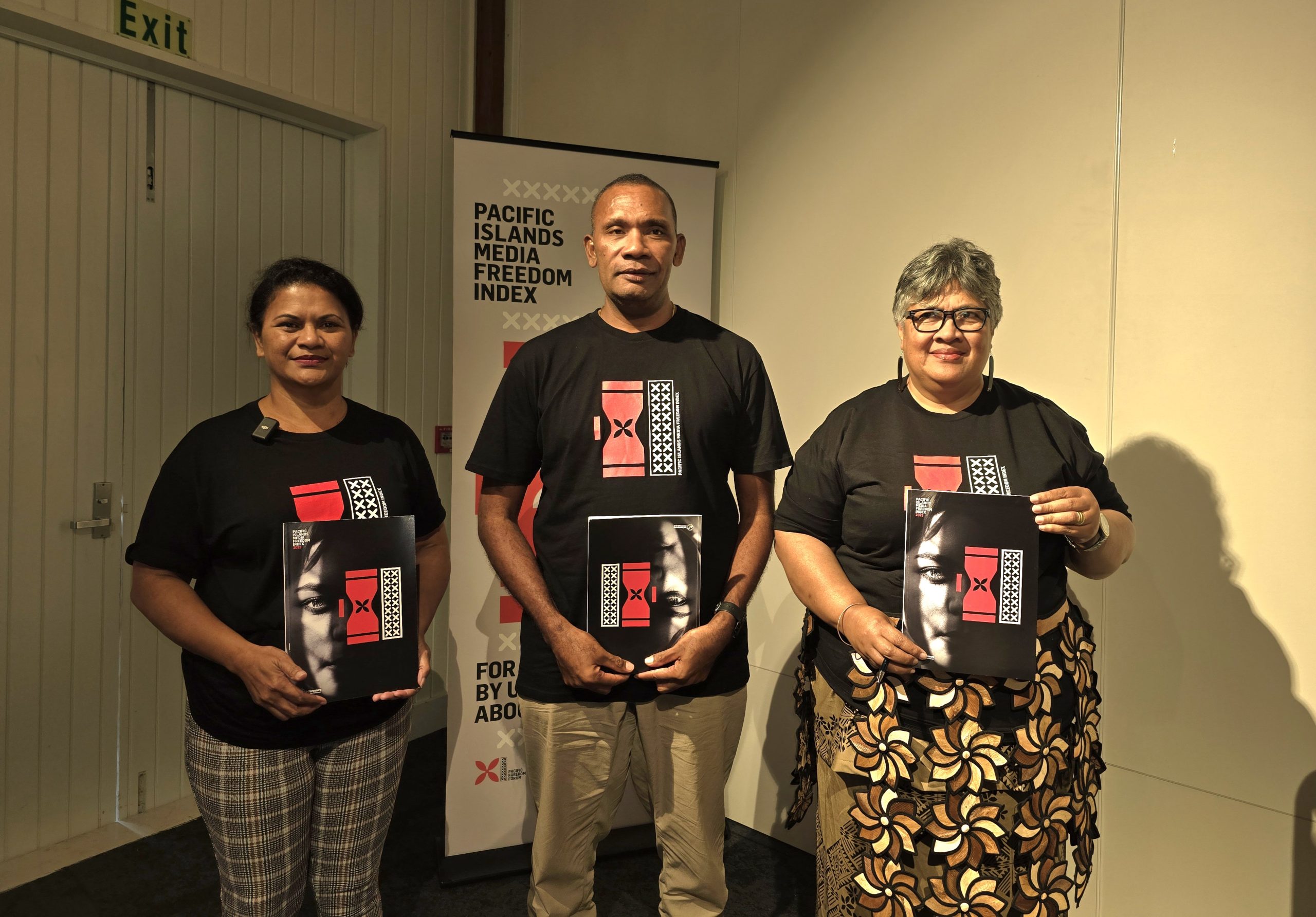
PFF’s recent work has underscored the depth of these challenges. The inaugural Pacific Islands Media Freedom Index found that economic and financial constraints are the greatest threats to media freedom in the region, followed closely by social, cultural and political pressures. The report, based on responses from journalists, editors and media leaders across 14 Pacific countries, also found that 60 percent of journalists often practice self-censorship because of fear of reprisals from communities, families and, in some cases, governments. These pressures do not affect newsrooms alone. They weaken public accountability on climate, governance, security, public spending and the coming many decisions shaping the future of the Blue Pacific.
PFF calls on governments, media owners, regional institutions and development partners to support independent Pacific journalism as essential democratic infrastructure.
A peaceful Pacific future must be built on open information, public trust and media freedom.