


Overview:
Four young Palauans took different paths into the Four Seasons training program in the Maldives. What they brought home was more than tourism and hospitality skills — they returned with greater confidence, broader experience and a shared desire to help strengthen Palau’s tourism industry. Their stories show how stepping outside their comfort zones changed the way they see themselves, their careers and what is possible at home.
By: L.N. Reklai
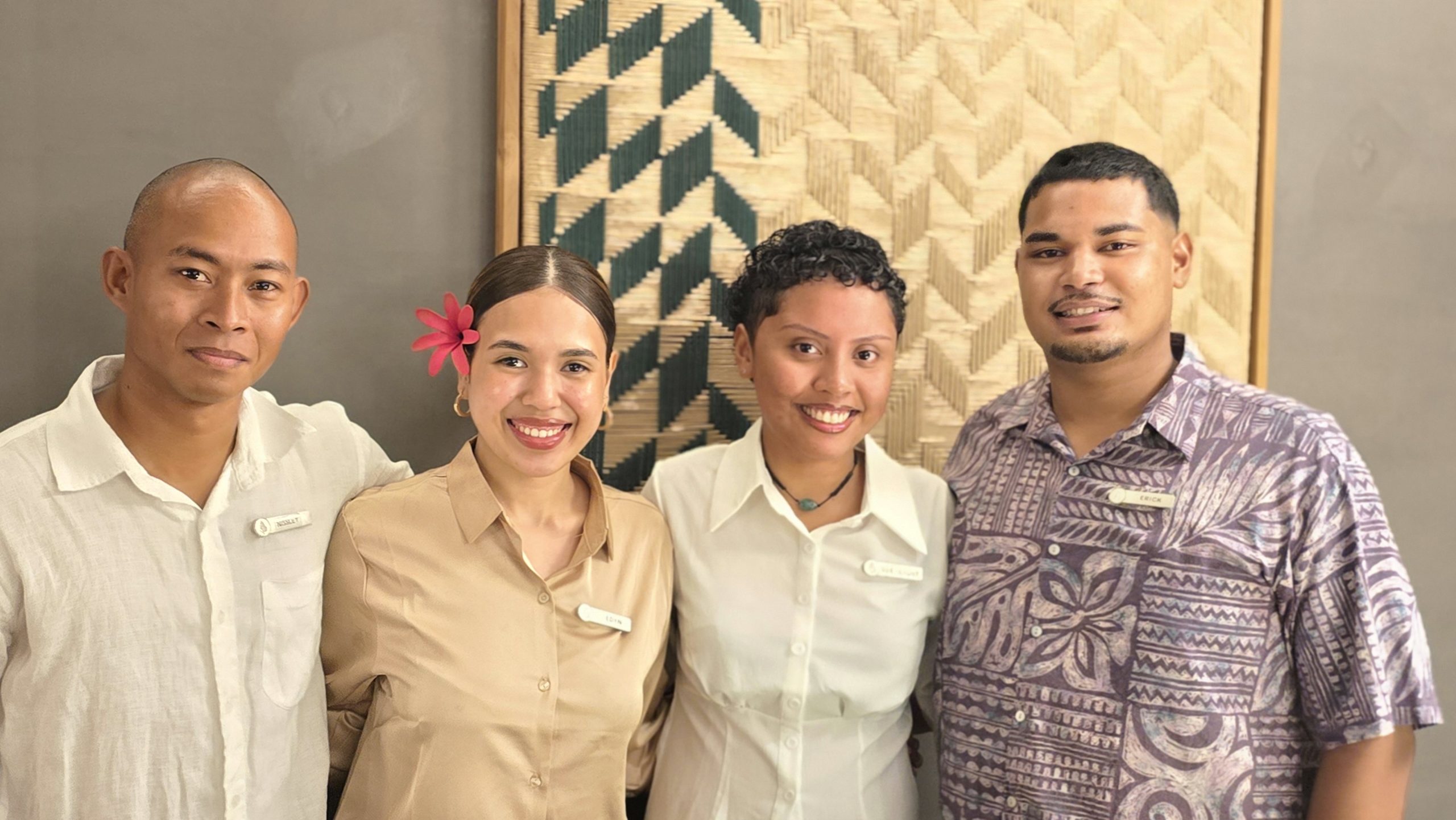
KOROR, Palau — “The character development from the change of environment is what brings us here today,” said Four Seasons receptionist Dilreng Dee-Light Patrick, reflecting a common experience shared by four young Palauans who trained overseas and returned home with new skills, confidence and a broader view of what Palau’s tourism industry can become.
The four young Palauans — Dilreng Dee-light Patrick, Nissly Rdang, Ericson Yosiyosang Kengichi and Edyn Lbong Dixon — entered the Four Seasons training program with different backgrounds and career goals.
Their paths took them to the Maldives, where they faced demanding training, worked in an international tourism environment and learned to adapt to standards and expectations different from those they had known at home.
They returned to Palau with more than technical training. Their interviews point to a shared growth in confidence, communication skills, independence and willingness to step outside their comfort zones.
For Edyn Lbong Dixon, the opportunity began as part of a plan to build experience toward becoming a flight attendant. She had worked as a receptionist at Four Points Plaza and Holiday Inn in Guam when she saw the Four Seasons apprenticeship opportunity and applied.
Initially excited about going to the Maldives, Dixon said she soon discovered that the training was demanding.
“Throughout the months that you are training, you find yourself that you’re more confident,” Dixon said, describing how she became more comfortable speaking in public, communicating with others and opening herself to new people.
The apprenticeship lasted a year, after which trainees were evaluated for possible employment. Dixon went on to become a full-time employee and said she remains grateful for the opportunity.
For Ericson Yosiyosang Kengichi, the decision to leave Palau was a risk.
Kengichi, now a dive attendant, had been working at Land & Survey when he saw a Four Seasons brochure and decided to try something different.
“I really didn’t want to be away from my family but I decided to try it and see how it goes,” he said.
In the Maldives, he learned to drive boats and dive while interacting with people from different backgrounds. He said the experience changed how he viewed himself and the world around him.
“At first I was a bit afraid,” Kengichi said. “But as I went, I risked it all, and then everything was alright.”
Nearly three years later, he is back in Palau working in the tourism industry. His parents, who initially worried about him leaving the country, are now surprised and happy to see him working, traveling overseas and returning home with a career.
For Nissly Rdang, the path toward tourism began in high school.
A teacher encouraged him to consider tourism, explaining that the industry encompasses many different professions. He discovered that he particularly enjoyed caring for customers, interacting with people and providing service.
His experience in the Maldives showed him what a highly structured tourism system could look like.
“I went to Maldives, which has a very different system, a much larger country, advanced tourism, a very structured system that opened my eyes and made me wish my country was the same,” Rdang said.
Rather than viewing the difference as a reason to leave Palau permanently, Rdang said it motivated him to learn from the experience and bring what he learned home.
He was part of the second group of trainees sent to the Maldives and later secured a job with Four Seasons. He said the intensive training gave him confidence in returning to Palau because he had been exposed to demanding, high-end service standards.
“When you come to Palau, you see these jobs, you feel confident that you can do them because you’ve been through the toughest training,” Rdang said.
His advice to other young Palauans considering tourism is simple: take the opportunity.
“If you don’t know what you want to be someday, just join tourism,” he said, pointing to the wide range of careers available in the industry.
Dilreng Dee-Light Patrick’s journey illustrates how the training can also open doors to different areas of the hospitality industry.
Patrick began as an apprentice in 2023 in food and beverage service. After completing the program, she worked as a guest service agent for Explorer, handling transportation and welcoming arriving guests.
She later asked to train in front office operations because it was not her original area of experience. That led to further training and promotion to receptionist.
“I’ve experienced different areas, from F&B to front office,” Patrick said, adding that her work also exposed her to housekeeping and other departments.
For Patrick, the biggest lesson was not limited to a particular job skill. It was the personal growth that came from adjusting to a different working environment.
She described the Maldives as a place where the pace of service and business is much faster than what young Palauans may be accustomed to.
The difference, she said, was an “eye-opener” that encouraged trainees to question familiar habits, develop new ones and bring those lessons back home.
“We can go outside and learn more from outside and bring it back,” Patrick said. “So I would say what we got from training is very big character development for me.”
Different paths, shared experience
Although their backgrounds and career goals differ, the four young Palauans describe remarkably similar outcomes from their overseas experience.
Dixon entered the program while building experience for a possible career as a flight attendant. Kengichi took a chance despite concerns about leaving his family. Rdang saw overseas training as a way to understand how a more developed tourism system operated. Patrick moved through food and beverage, guest services and front office work.
Their common experience was being pushed outside familiar surroundings, outside of their comfort zone.
The Maldives exposed them to demanding service standards, a faster pace of business, people from different cultures and a more structured tourism system. The experience challenged them, but it also helped them become more confident in their abilities.
For Rdang, the lesson was about bringing knowledge home. For Patrick, it was character development. For Kengichi, it was overcoming fear and taking a chance. For Dixon, it was gaining confidence in communicating with others and building professional relationships.
Together, their experiences suggest that overseas training was not simply preparation for individual jobs. It became a way for the young Palauans to see new possibilities for themselves and for Palau’s tourism industry.
Patrick summed up that transformation by looking back at who they were before leaving Palau.
“Like four years back or two years back, we were typical Palauan kids and everything,” she said. “But … the character development from the change of environment is what brings us here today.”
Now back home and working in Palau for Four Seasons, the four are positioned to apply what they learned to the country’s growing tourism industry — bringing with them not only technical experience, but the confidence to take on greater responsibilities and continue developing their careers.