


Overview:
A new expedition is underway to study at least 22 whale and dolphin species in Palau's waters, track their movements and feeding grounds, and strengthen local marine research expertise.
KOROR, Palau (Nov. 16, 2026) — A new marine research expedition is underway to expand scientific knowledge of at least 22 known whale, dolphin, and other fully aquatic mammal species in Palau, while examining the ocean conditions and ecosystems that support them.
The expedition brings together Conservation International, the Palau International Coral Reef Center (PICRC), government agencies and international marine science experts. The research will build on more than a decade of cetacean studies conducted in Palau from 2012 to 2024, as well as offshore surveys in the Palau National Marine Sanctuary (PNMS) in 2025. Those studies helped confirm at least 22 cetacean species in Palau’s waters.
The latest research aims to better understand where these marine mammals travel, feed and gather, and how ocean conditions influence their movements and access to food.
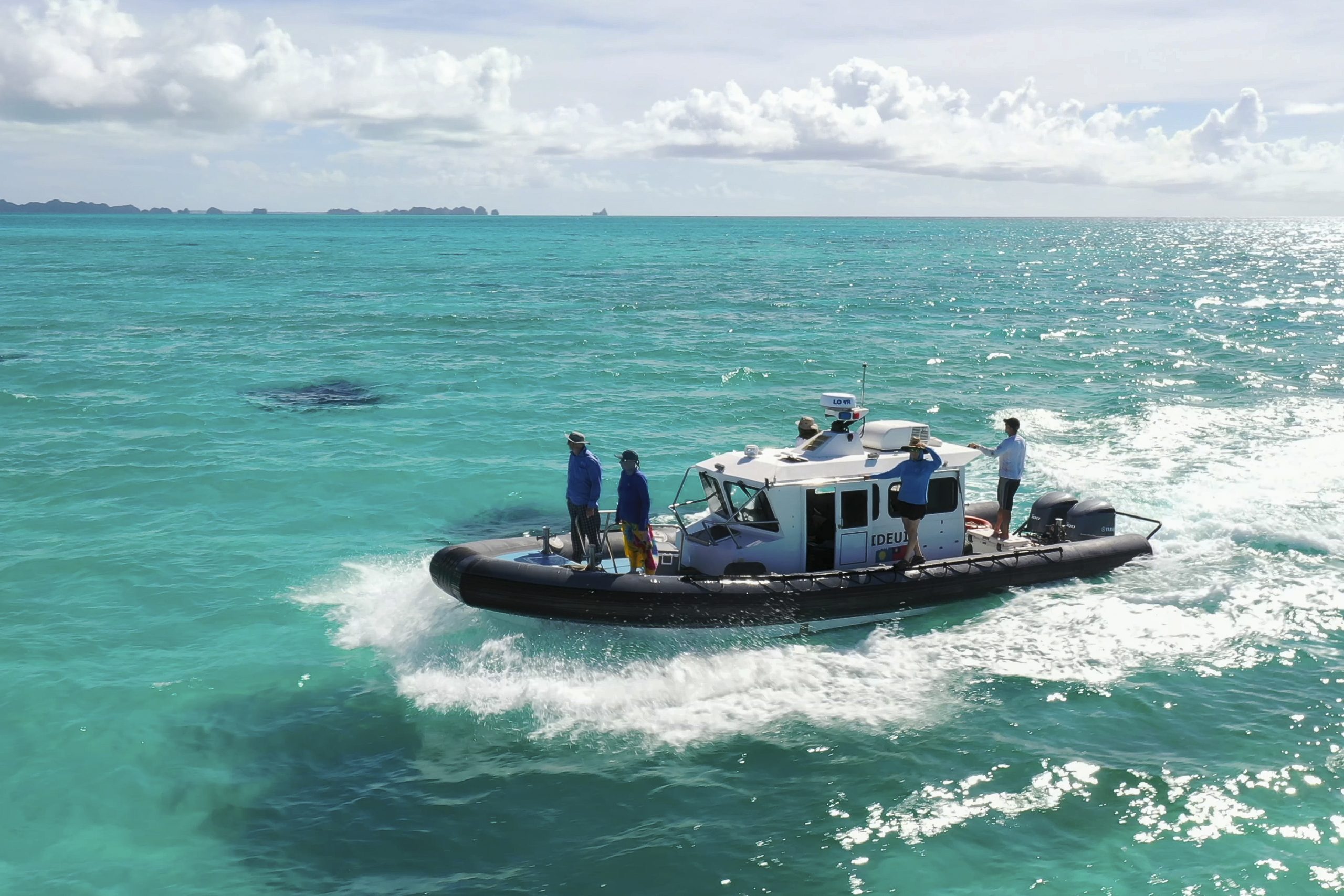
The expedition will combine offshore surveys, small-boat research and oceanographic investigations. Researchers will revisit established survey routes covering 19 transects and approximately 300 nautical miles, allowing them to compare new findings with previous research.
Additional investigations west of Palau will examine ocean currents and rotating water systems known as eddies. Scientists will study how these ocean features affect the availability of prey and create feeding areas for marine predators. Previous surveys recorded sei and Bryde’s whales feeding in these waters.
Small-boat research will include photo-identification, genetic sampling and satellite tagging. These techniques will help researchers identify individual animals, collect information about their populations and better track their movements and habitat use.
Beyond gathering scientific information, the expedition will focus on strengthening Palau’s local research capacity.
Palauan researchers, government personnel and local collaborators will receive practical training in research operations, sampling and tagging techniques. Local captains and vessel operators will also be trained in safe and responsible approaches to whales and dolphins.
The program will also include a national workshop bringing together tourism operators, managers and regulators to discuss responsible cetacean tourism and international best practices. The workshop aims to support the development of draft whale and dolphin-watching guidelines for Palau.
Science communications training and the production of a documentary-style film will further help share the research findings and strengthen local storytelling skills.
The expedition is funded by the Blue Nature Alliance and led by Whaleology. It brings together expertise from Conservation International, PICRC, the South Pacific Whale Research Consortium (SPWRC), the University of Auckland, and the Division of Maritime Security and Fish & Wildlife Protection.
The findings are expected to contribute to ongoing monitoring of the Palau National Marine Sanctuary, marine spatial planning and regional marine conservation initiatives.
Through the research, training and public engagement activities, the expedition aims to strengthen understanding of Palau’s whale and dolphin populations and the ocean ecosystems that sustain them. (Source: CI & PICRC)