


Overview:
A major step toward a new fisheries and tourism hub: Ngatpang State has conveyed 404,369 square meters of reclaimed land and adjacent waters to the national government for development of a proposed multipurpose port serving fisheries, aquaculture and tourism.
By: L.N. Reklai
NGATPANG, Palau – (August 12, 2026) – Ngatpang State has conveyed 404,369 square meters of reclaimed land, along with the immediate waters in front of its port known as Raelkelat, to the Palau Public Lands Authority for use by the Ministry of Agriculture, Fisheries and Environment to develop fisheries and tourism infrastructure, including a proposed multipurpose port.

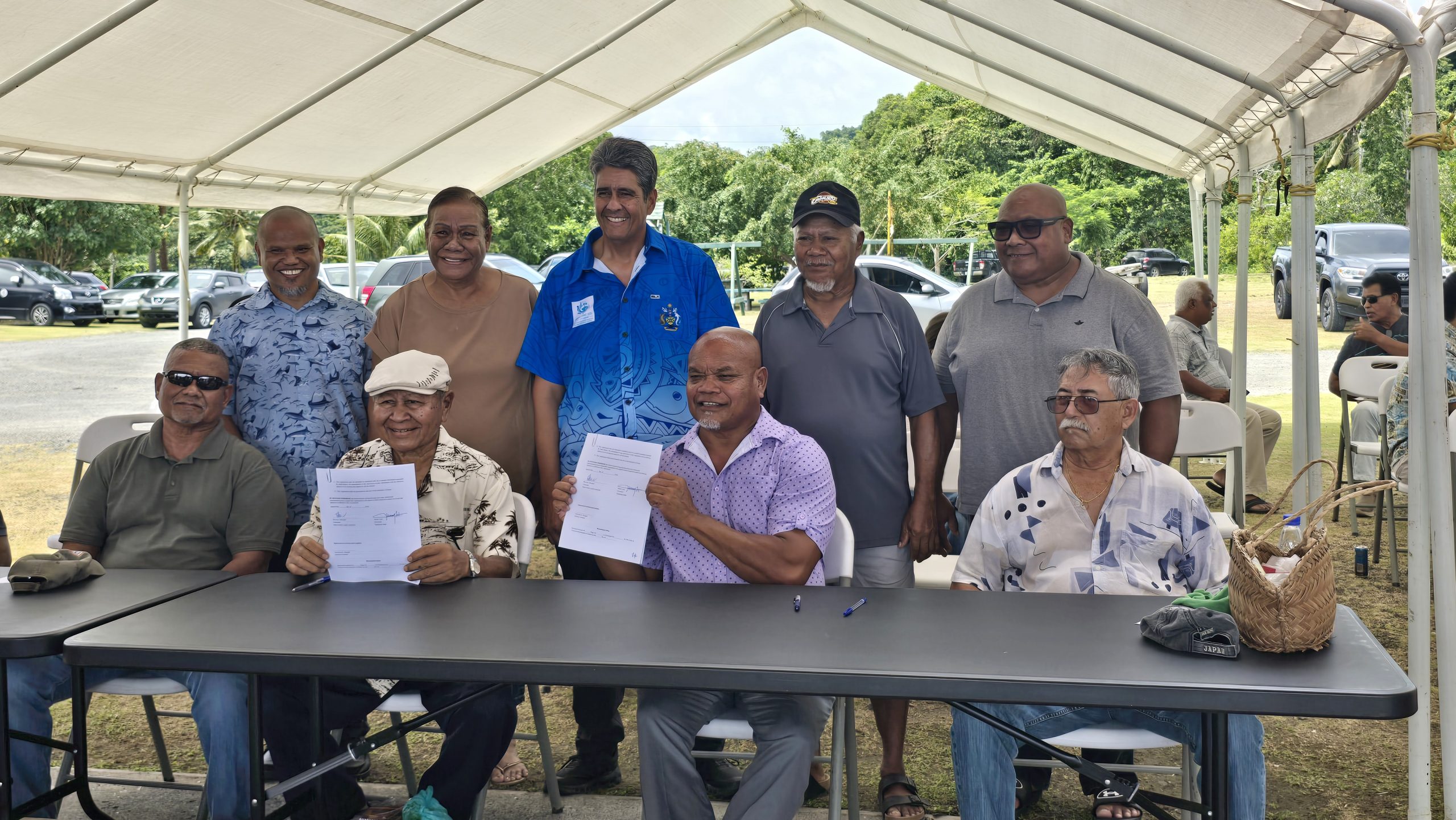
The conveyance agreement was signed Wednesday, Aug. 12, 2026, during a ceremony at Kamesang Dock in Ngatpang. The ceremony was witnessed by President Surangel Whipps Jr., Ngatpang State Gov. Jersey Iyar, members of the Ngatpang State Legislature, state governors and speakers, members of the diplomatic corps and community members.
The property conveyance is expected to support the national government’s plans to transform the Kamesang Dock, adjacent reclaimed areas and surrounding waters into a major fisheries and tourism hub.
MAFE Minister Steven Victor said the conveyance supports the Sustainable Ocean Plan, a policy framework guiding marine-related activities in Palau.

President Whipps thanked the people of Ngatpang for making the property available to the national government for the benefit of both the state and Palau.
“It shows the national and state working together for Palau,” Whipps said.
Under the development concept, the Ngatpang port would serve as a fisheries port capable of receiving commercial fishing vessels and providing a location for boats to offload their catch. The project is also expected to include aquaculture activities, such as baitfish ponds, shrimp production and other related operations.
Whipps said the new facility is particularly important as Palau’s existing fisheries port at Malakal is no longer available for the same purpose.
“Malakal is closed now,” Whipps said, pointing to the need for the new facility to serve as a fishing port for Palau.
The proposed port is envisioned as a multipurpose facility serving fisheries, aquaculture and tourism.

Japan is supporting planning for the port, but a feasibility study being conducted by Japan has not yet been completed. Japanese Ambassador to Palau Kenichi Kasahara said he could not comment on the study’s findings until it is finished.
Kasahara said the foundation for the port’s development is its potential to strengthen food security, create jobs, support businesses and sustain coastal and island economies while protecting the marine ecosystems that support long-term prosperity.
The port project is moving forward as the property conveyance is completed and construction of an access road to the Ngatpang port begins.
However, a related proposal to reduce the size of the Palau National Marine Sanctuary from 80% of Palau’s waters to 30% remains before Congress. The proposed change is considered a critical component of planning for the new fisheries port.
Speaking at the conveyance ceremony, Kasahara said Japan respects the founding principles of the PNMS and supports an approach that balances conservation with sustainable use.
“Japan respects its founding ideals,” Kasahara said, adding that Japan looks forward to a constructive amendment based on science and community input.
Kasahara said such an approach could enable responsible cooperation that benefits Palau’s people and fishing communities through stable, transparent rules and high standards for sustainability.
The conveyance of the Ngatpang property marks a significant step in the national government’s plans to establish a new port that combines fisheries, aquaculture and tourism.