


Overview:
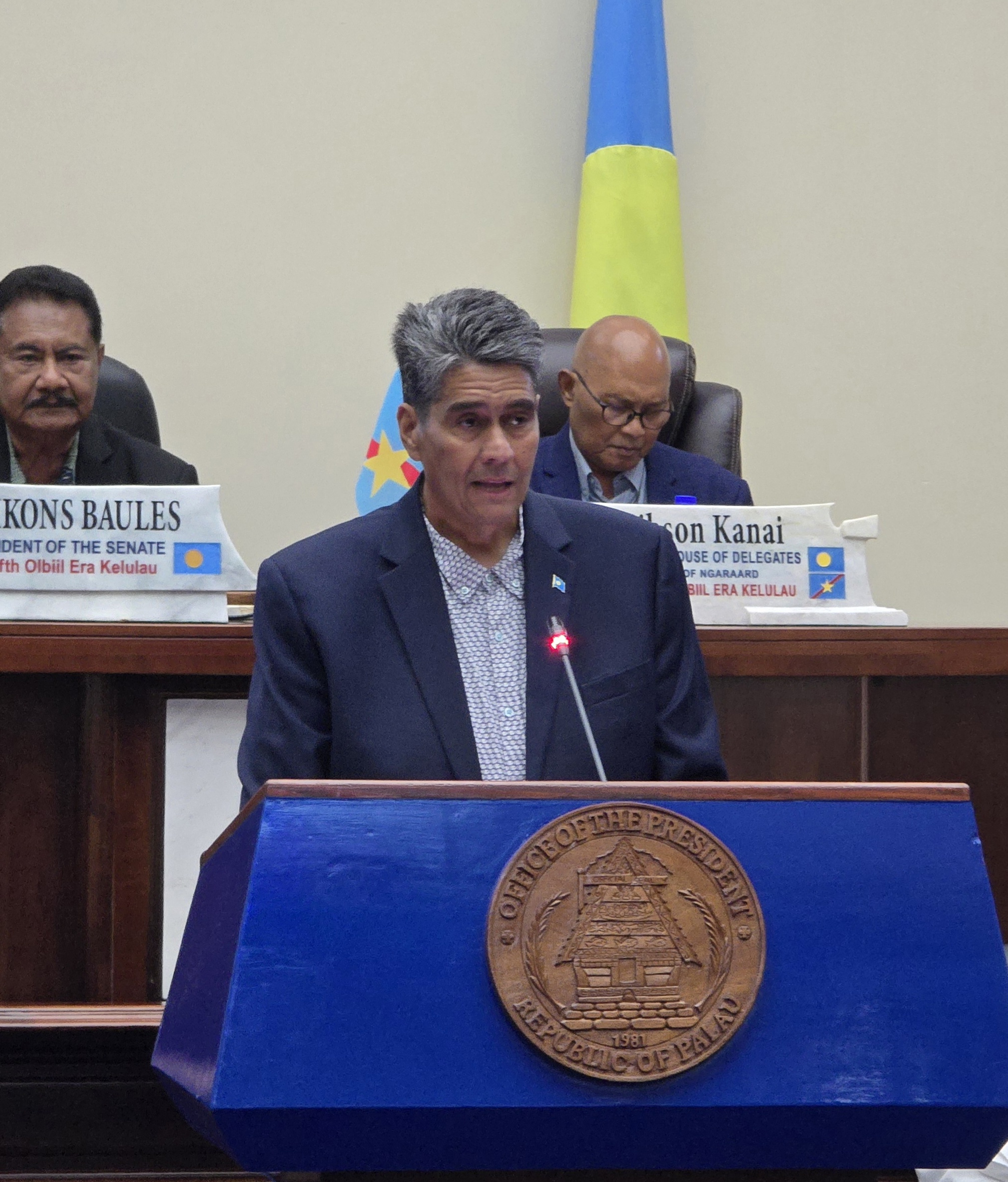
**A new path to permanent residency could be coming to Palau.** President Surangel Whipps Jr. has proposed legislation creating a permanent resident visa for certain non-Palauans with deep family and longstanding ties to the country, while preserving key rights reserved for Palauan citizens.
By L.N. Reklai
KOROR, Palau — A new permanent resident visa category for certain non-Palauans who have deep and longstanding ties to Palau, has been proposed to address the current immigration system that leaves some people who have made the country their home face the same uncertainty as short-term foreign workers.
In a letter transmitting the proposed legislation to the Olbiil Era Kelulau on Aug. 20, Whipps said Palau has been home for years to people who were raised in the country, built families and livelihoods there, and made lasting contributions to its economy and society.
“Yet under our current system, these long-term residents are treated the same as short-term foreign workers,” Whipps wrote, noting that they must continually renew their visas and face uncertainty over their right to remain in Palau.
The proposed bill would create a new permanent resident visa category under Title 13 of the Palau National Code. The legislation is intended to provide a more permanent immigration status while preserving the distinction between residency and Palauan citizenship.
Under the bill, permanent residents would be allowed to live indefinitely in Palau, enter and leave the country without limitation and work without obtaining a nonresident work permit.
They would not, however, become Palauan citizens. The proposed law would bar permanent residents from owning land or an interest in land and from voting in national or state elections or referenda.
The bill as currently drafted establishes eligibility specifically for individuals who were legally adopted by Palauan citizens before reaching age 16.
Applicants would have to demonstrate that they were adopted by a Palauan citizen and lived with their adoptive parent or parents in a parent-child relationship in Palau for at least two continuous years before turning 16. The adoptive parent also must have exercised primary parental responsibility, including financial support, education and caregiving.
The legislation would exclude adoptions made primarily to obtain immigration benefits. It establishes circumstances that would create a rebuttable presumption that an adoption was entered into for that purpose, including continuing substantial personal or financial ties between the adoptive and biological parents, certain adoptions occurring shortly before the applicant’s 16th birthday, and exchanges of money or other consideration related to the adoption.
Whipps said the proposal would strike a balance between protecting the rights of Palauan citizens and recognizing the contributions of people who have helped build the country.
“By defining clear criteria and procedures for permanent residence,” he wrote, “this measure also strengthens transparency and accountability within our immigration system.”
The proposed framework would also require applicants to provide proof of adoption, age and identity, along with other documentation required by the Bureau of Customs and Border Protection.
The bureau would review applications and determine eligibility. The bill gives the director authority to investigate the circumstances surrounding an adoption, including obtaining sworn statements, interviewing people familiar with the adoption and requesting information from domestic or foreign authorities.
A permanent resident visa could be revoked if it was obtained through fraud or misrepresentation, if the holder was convicted of a felony in Palau, or if the holder violated the conditions of the law or related regulations.
The bill also provides penalties for fraudulent applications, including denial of a permanent resident visa, removal or exclusion from Palau and possible criminal prosecution under laws governing fraud, false statements or perjury.
Whipps said the proposal comes as another measure is pending in the House of Delegates that would provide travel documentation to people facing similar circumstances.
He invited lawmakers to consider whether the two measures could be combined if the pending House legislation advances.
The proposed permanent resident visa would create a new category of legal residence that does not currently exist in Palau. While the bill does not extend permanent residency generally to all long-term foreign residents, its stated purpose is to establish a clearer and more lasting status for individuals whose lives and family ties are rooted in Palau.
The legislation now goes to the Olbiil Era Kelulau for consideration.