


Overview:
Pacific leaders from Solomon Islands, Palau and Tonga showcased community-driven strategies to end gender-based violence during a high-level side event at the Commission on the Status of Women on March 17. The session highlighted the region’s growing global leadership in advancing culturally grounded, inclusive approaches to prevention, response, and survivor support.
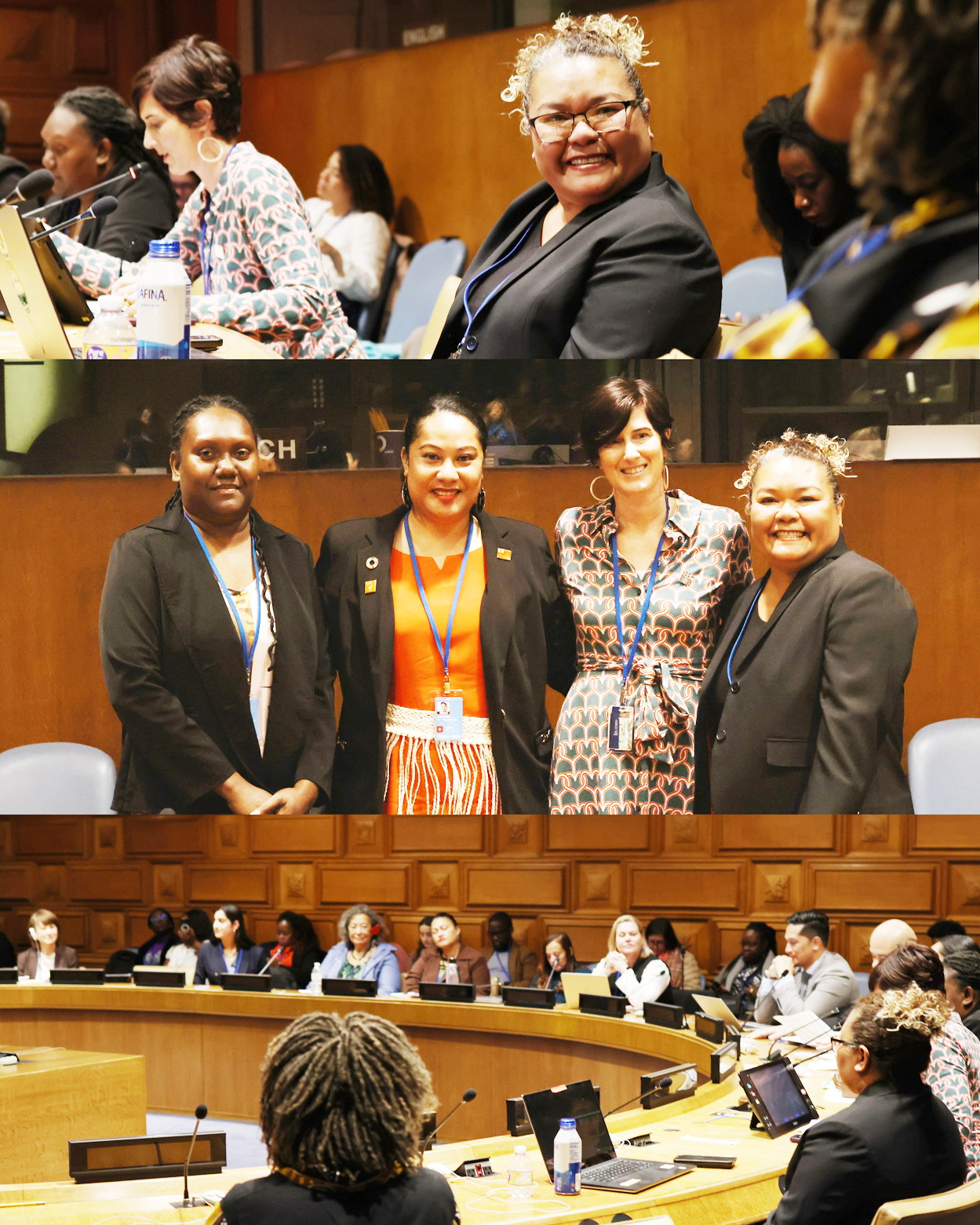
Led by representatives from Solomon Islands, Palau, and Tonga, a diverse group of global women leaders convened for a side event on March 17th, held on the margins of the United Nations Commission on the Status of Women – CSW70, entitled “Pacific Leadership on Ending Gender-Based Violence (GBV): Cross-Regional Actions and Global Learning.” Hosted by Solomon Islands in its capacity as Chair of the Pacific Islands Forum (PIF), the event highlighted the Pacific’s growing global leadership in preventing gender-based violence through culturally grounded, community-led approaches.
The event, moderated by the Chief of the UN Trust Fund to End Violence against Women, united together policymakers and regional and civil society leaders to learn and reflect on other global actions in GBV policy and practice.
Upholding a unified voice throughout the hour-long event, panelists voiced the need to move beyond a singular reliance on institutional frameworks, advocating instead for solutions woven directly into the social fabric of daily life.
Representing the Republic of Palau as panelist, Ms. Eunice Akiwo, Director of the Bureau of Domestic Affairs, detailed the nation’s ongoing commitment to strengthening inclusive legal systems and culturally informed policies to address GBV.
“In line with this year’s priority theme on promoting inclusive and equitable legal systems, Palau continues work to finalize its draft Gender Mainstreaming Policy as well as advance the implementation of the Family Protection Act of 2012,” Ms. Akiwo stated. “This legislation ensures access to justice and provides comprehensive prevention and response services for all members of society, including vulnerable and maritime communities, as well as women and girls in all their diversities.”
Addressing challenges in reaching victims in remote areas, Ms. Akiwo emphasized that the government does not work alone. “We include the whole of society – including civil society organizations and traditional community structures – to serve as links to victims and survivors,” she explained. “They assist survivors when immediate help cannot reach them, ensuring timely and culturally sensitive support.”
She also acknowledged emerging challenges, including technology-facilitated GBV and the social impacts of illicit drug use, which continue to affect families and communities. In response, Palau is revisiting its Gender Mainstreaming Policy through nationwide consultations with civil
society and a whole-of-government review to strengthen gender equality and social inclusion across public service delivery.
Bridging tradition and modern advocacy, Ms. Akiwo articulated the role of culture in promoting gender equality and preventing violence. As a matrilineal society, it is by way of tradition where women select chiefs, lead family structures, manage resources, pass down wealth, and remain central decision-makers in their communities. By maintaining their central roles in their families and clans, in both traditional and civic spheres, it demonstrates that when a society is rooted in mutual respect and honor, it inherently fosters an environment of equity and encourages community efforts to end gender-based violence.
Other panelists shared impactful national initiatives. The Solomon Islands presented its Safenet model, the country’s largest coordinated response system designed to ensure timely, integrated services for GBV survivors by bridging gaps among service providers and enhancing accountability. Tonga highlighted its renewed commitment through the Women’s Empowerment and Gender Equality Policy (2023–2030), which envisions communities free from violence, stigma, and discrimination. Key initiatives include a national action plan on women, peace, and security, a family wellbeing strategy, expanded labor mobility support, a national GBV strategy, and a men’s wellbeing initiative aimed at addressing stigma.
The event concluded with a decisive call for continued cross-regional collaboration, knowledge sharing, and investment in community-based solutions to prevent and respond to gender-based violence effectively.