


Overview:
Angaur residents are facing a growing water crisis as prolonged drought linked to super El Niño leaves families dependent on drinking water transported from Koror. The dry conditions are also threatening crab harvesting, crops and incomes for households that rely on local products.
By: L.N. Reklai
KOROR, Palau (Oct. 24, 2026) — Angaur residents are struggling to secure drinking water and maintain their livelihoods as a prolonged drought linked to a super El Niño threatens Palau and much of the western Pacific.
Surrounded by seawater, salty inland lakes and wells with brackish water, Angaur is facing a growing water crisis. Despite having water all around the island, residents depend on drinking water transported from Koror, while the dry conditions are making it harder to find crabs, grow crops and earn income.

Each week, Angaur State transports residents’ water containers to Koror to be filled with drinking water at no cost to the people. But the service depends on boat transportation and is vulnerable to weather and other conditions that can interrupt deliveries.
An Angaur resident traveling to Koror said she counted 82 five-gallon containers and 20 three-gallon containers during the last boat trip.
The containers are normally transported about once a week, but the boat had not returned for two weeks, raising concerns about the growing demand for drinking water.
“I think there will definitely be more containers since the boat has not been back for sometime,” she said.
The delay highlights the challenges residents face in securing enough safe water as the drought continues.
“We have water tanks,” said Melanie Santiago, an Angaur resident who sells ukaeb, or processed land crab meat, to supplement her formal income. “But with little rain, we don’t have much water and what is in there is not safe, so we need to get fresh water from Koror.”
Wells remain available, but residents question water safety
Angaur’s main water source is its underground wells. Although water levels remain adequate, residents say the water is not safe for drinking or cooking.

Thoms Alfred, a Palau Public Utilities employee responsible for Angaur’s water system, said the water levels in the wells remain good.
However, residents report concerns about using the water for household needs beyond cleaning and washing clothes.
Some residents say bathing in the well water can cause “pink eyes” or skin rashes, although those concerns have not been independently confirmed.
One resident said she now brings water from Koror to cook rice rather than use the water from Angaur’s wells.
The situation leaves families dependent on water transported by boat, even as delays and limited rainfall make it harder to maintain a reliable supply.
Drought threatens crab harvest and family incomes
The water shortage is only one part of the hardship facing Angaur residents.
The prolonged dry conditions are also affecting two important sources of income for local families: ukaeb, or processed coconut land crab meat, and kebui, or pepper leaves.
Santiago said the dry, hot weather drives crabs deeper underground, making them increasingly difficult to find.

“When it’s dry and hot like it is now, the crabs go deep underground and it becomes very very hard to find them,” she said.
The drought created particular concern when the government ordered 2,500 ukaeb and 2,500 crab cakes from Angaur producers for the Pacific Islands Forum Leaders Summit.
Santiago said producers feared they would not be able to fulfill the order because the prolonged dry conditions had made crabs difficult to catch.
Fortunately, rain arrived, allowing residents to collect crabs as they emerged from the ground.
“We were so worried because it has been so dry for so long, that we could not find any crabs,” Santiago said. “We were worried we may not be able to fulfill our order.”
She said residents rushed to catch crabs when the rain came, trying to gather as much as possible to sell.
That has become a pattern for Angaur producers: waiting for occasional rainfall and taking advantage of brief opportunities to harvest crabs before the ground dries again.
About 60% of residents depend on local products
Santiago estimates that about 60% of Angaur residents supplement their income by selling products such as crab meat and kebui.
The drought is affecting those livelihoods, particularly for families who depend on the products as their main source of income.
“It is even worse for those that have no other means income other than selling their crops and crab products for living,” she said.
For those households, the prolonged dry spell threatens not only food and water supplies but also the money needed to support their families.
The effects extend beyond crab harvesting and pepper leaves.
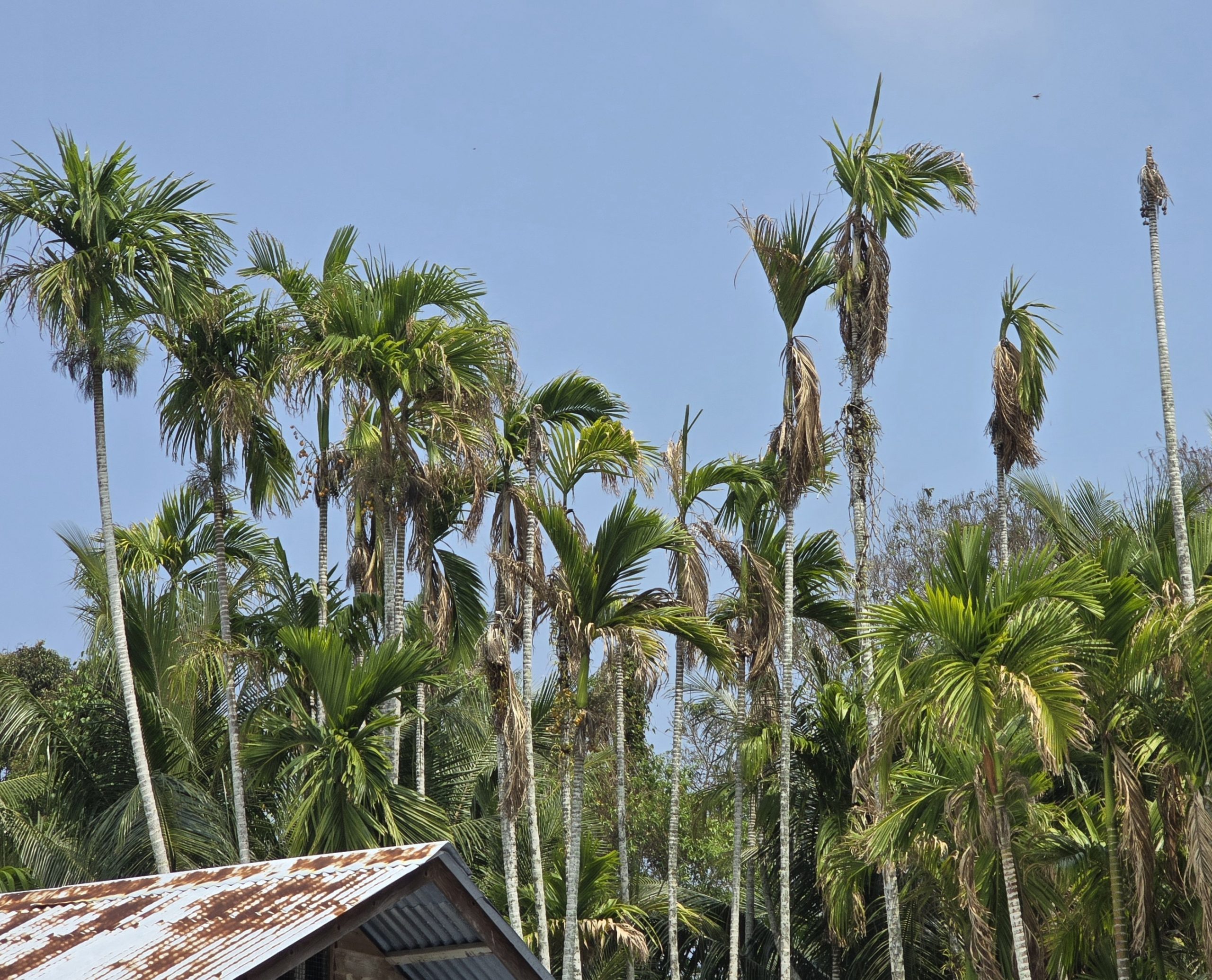
Other crops, including papayas, betel nut and coconuts, are already facing challenges from invasive macaque monkeys and coconut beetles. The drought is adding another strain.
Brown and yellowing leaves on various crops indicate the effects of the dry conditions and raise concerns about further damage if rainfall remains limited.
Outlying states face greater hardship
While the drought is affecting Babeldaob and other parts of Palau, the impact is particularly severe in smaller, outlying states such as Angaur.
Residents must contend with limited local sources of safe drinking water, dependence on boat transportation and declining opportunities to earn income from traditional products.
With water levels in wells still adequate but residents questioning the water’s safety, the island’s immediate challenge is securing dependable drinking water while the drought continues.
For Angaur families, the consequences are already visible in delayed water deliveries, difficult crab harvests and crops showing signs of stress.
The prolonged dry spell is placing pressure on both household needs and the local economy, leaving residents increasingly dependent on rainfall and transportation from Koror.