


Overview:
Pacific leaders are calling for stronger regional unity to turn the Pacific Islands Forum’s 2050 vision into action on climate change, ocean protection and economic resilience.
By: L.N. Reklai
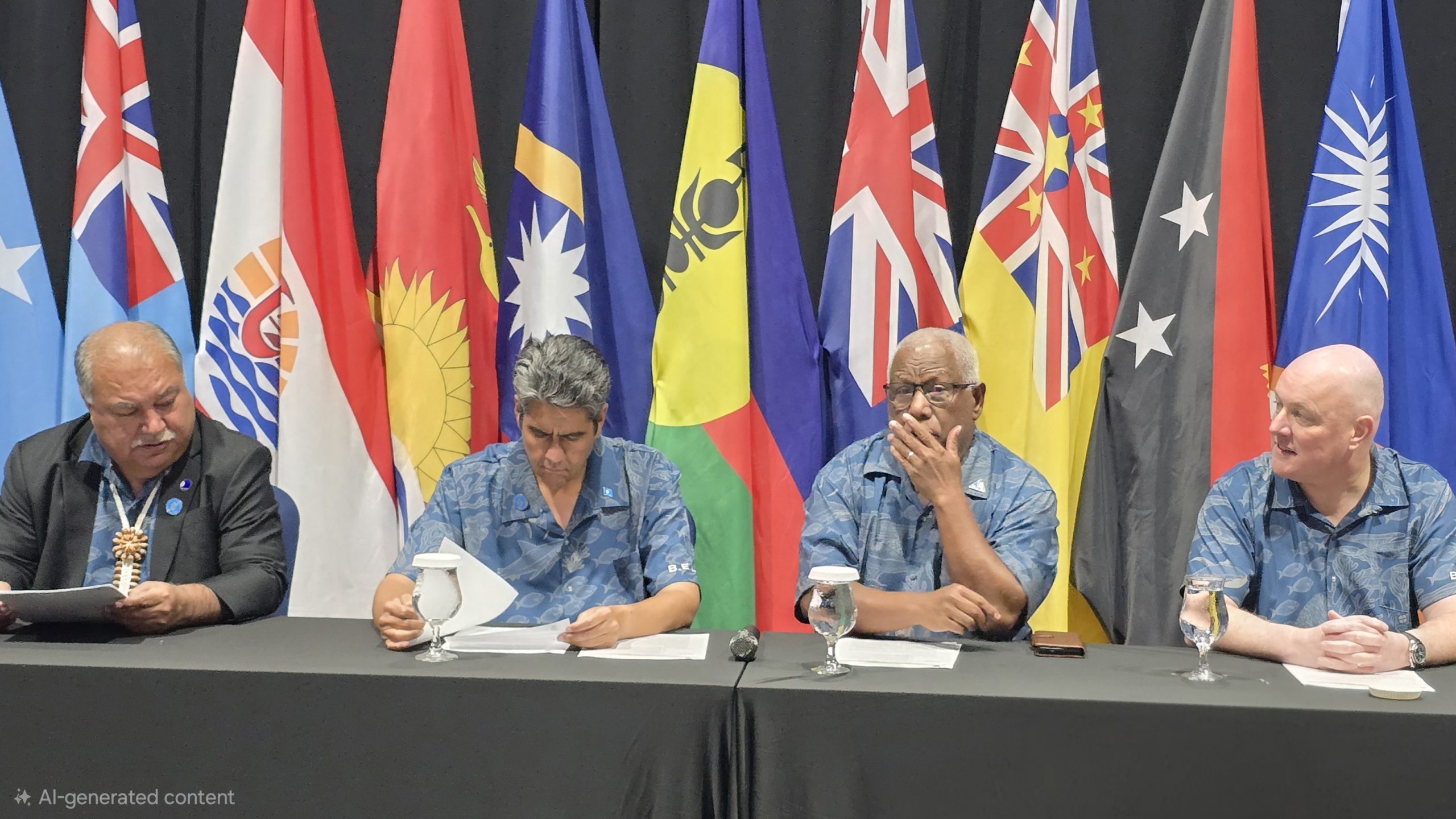
KOROR, Palau (September 4, 2026) — Pacific leaders in their 55th PIFLM’s communique are calling for stronger regional solidarity and practical collective action as they confront climate change, economic vulnerability, security challenges and growing pressure on the region’s resources, with keeping global warming below 1.5 degrees Celsius emerging as a central priority of the 55th Pacific Islands Forum Leaders Meeting in Palau.
The leaders’ message reflects a broader vision of Pacific agency through collective implementation — a commitment to ensuring that regional priorities are determined by Pacific countries themselves and translated into tangible benefits for their people.
The approach reflects a region seeking increasingly to shape its own future rather than simply respond to decisions made elsewhere.
Across the leaders’ communiqué, regional cooperation is framed as member-led and grounded in national sovereignty, while recognizing that Pacific countries have different capacities and circumstances. The emphasis is on practical cooperation rather than statements of support alone.
Climate change sits at the center of that agenda.
For Pacific island countries, the climate crisis is not viewed as an isolated environmental issue. It is directly linked to security, economic resilience, disaster preparedness, food and water security, fisheries, energy, health, gender equality, maritime boundaries and the movement of people.
The leaders are maintaining pressure on the international community to act with greater urgency to keep the 1.5C temperature goal within reach, the Belau Declaration.
For Pacific countries, the target represents more than a global climate benchmark. It is closely tied to the survival of vulnerable island communities, ecosystems and economies facing rising seas, stronger climate impacts and increasing disaster risks.
The leaders also continued to press for greater access to climate finance, particularly financing that reflects the unique vulnerabilities of small island developing states and does not add to already significant debt burdens.
The communiqué links ambitious international advocacy with measures the region can implement itself.
Finance is repeatedly identified as a critical factor. Whether the issue is climate action, disaster preparedness, energy transition, disability inclusion, gender-based violence prevention, digital governance or regional institutions, leaders recognize that commitments cannot be delivered without adequate resources and capacity.
The emphasis on regional agency also extends to the Pacific’s natural resources and strategic interests.
On issues including fisheries, deep-sea minerals, security arrangements, climate finance, digital governance and engagement with external partners, leaders are asserting that Pacific countries must retain control over their priorities, resources and decision-making.
That position reflects a broader understanding of regionalism as a form of strategic autonomy — with Pacific countries working together to increase their collective influence while safeguarding national sovereignty.
Inclusion is also presented as part of delivering that vision.
Women, youth, children, persons with disabilities, traditional knowledge holders, coastal communities and smaller island states are incorporated into discussions on economic resilience, climate governance, health, digital safety and regional decision-making.
The leaders’ agenda also looks beyond the immediate Forum, with 2027 emerging as an important delivery and accountability horizon.
A number of regional initiatives and processes are expected to advance next year, including work on the PCLI/ARISE design, international engagement strategy, the West Papua report, education cooperation, preparations for the BBNJ process, artificial intelligence governance, the Polynesian Ocean Summit and multiple climate diplomacy efforts.
The longer-term outlook extends toward 2030 and 2050, including benchmarks for global energy transition and emissions reductions.
The region is demanding that the world respond more urgently to the climate crisis — particularly the need to keep warming below 1.5C — while also strengthening its own institutions and collective capacity to meet the challenges ahead.
For Pacific leaders, climate action, economic development and security are increasingly inseparable. Their message from Palau is that the region intends not only to advocate for change internationally, but to work together to implement its own solutions.