


Overview:
Transnational organized crime is emerging as a growing security challenge for Pacific Island nations, with Palau calling for stronger regional cooperation, greater capacity and more targeted support from international partners.
By Laurel Marewibuel
KOROR, Palau (August 31, 2026) — Pacific Island nations must strengthen regional cooperation and make their security priorities clear to international partners as transnational organized crime becomes a growing threat across the region, Palau Minister of Justice Jennifer S. Olegeriil said.
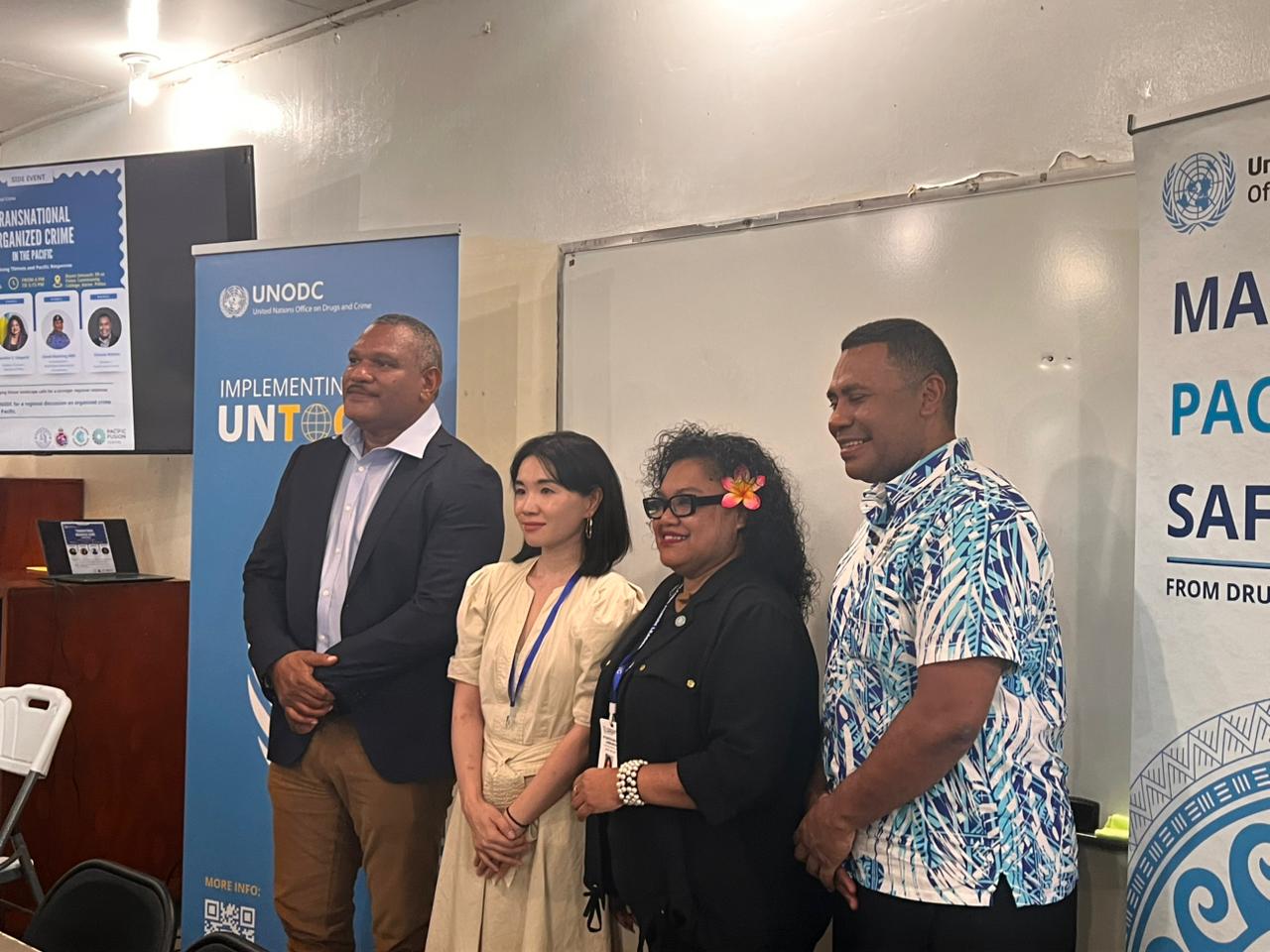
Olegeriil made the comments during a side event organized by the United Nations Office on Drugs and Crime that examined the impact of transnational organized crime on the Pacific and how countries can work together to respond.
The discussion comes as Pacific leaders consider regional security priorities and the need to strengthen cooperation against crimes that increasingly cross national borders.
Olegeriil said transnational crime was identified as a key issue in the regional security process held in the months leading up to the Pacific Islands Forum leaders’ meeting.
She said the response must involve individual countries as well as coordinated action across the Pacific.
“How are we responding to those threats as individuals, Pacific Island nations, but more importantly as a Pacific region,” she said.
“One of them, a primary agenda item when we talk about regional security, is transnational crime, which the leaders will be talking about,” she said.
She said discussions such as the UNODC side event provide an opportunity for Pacific countries to ensure their concerns are heard by regional law enforcement agencies and international partners.
“It continues to amplify what the threats are and what the priorities are so we can, as a region, influence partners like UNODC and other partners. We can leverage support that comes with technical expertise and funding, and continue to build our capacity to be able to respond or to investigate and tackle transnational crimes,” Olegeriil said.
The minister said transnational organized crime covers a broad range of activities affecting Pacific communities, including illicit drug trafficking and use, money laundering, human trafficking, financial scams and online gambling.
She said regional engagement can help Pacific countries communicate where support is needed, including training, funding and assistance with policy development.
“Whether it be training, whether it be funding, whether it be policy development, these are opportunities to amplify those needs to our partners,” Olegeriil said.
Viliame Bovoro, director of the Pacific Institute and a panelist at the event, said the discussion was also intended to raise awareness of the growing impact of transnational organized crime, particularly illicit drugs, across the Pacific.
“I think the main objective is just to really raise awareness of how transnational organised crime, in particular illicit drugs, is impacting the region,” Bovoro said.
He said the consequences extend beyond law enforcement and affect public health and communities.
“It not only has a law enforcement impact, but a broader societal impact as well in terms of the health, HIV, the social harms that are being caused by drugs all across the region,” he said.
Bovoro said the discussion also supports Pacific leaders as they consider transnational organized crime as part of the region’s broader security agenda.
“So this discussion is really part of supporting the discussion by leaders,” he said.
The panel highlighted the importance of ensuring that Pacific-led security priorities guide engagement with international partners, while building the technical, financial and investigative capacity of Pacific countries to address emerging threats.
For Pacific nations, the challenge is increasingly regional, requiring stronger cooperation among governments, law enforcement agencies and international partners.