


Overview:
Pacific journalists and anti-corruption experts are joining forces to investigate a growing threat: the leakage and misuse of climate finance and disaster relief funds. At a UNODC-PINA roundtable in Fiji, journalists shared tools and investigative techniques to follow the money, verify climate claims and expose corruption that can leave vulnerable Pacific communities behind.
By: L.N. Reklai
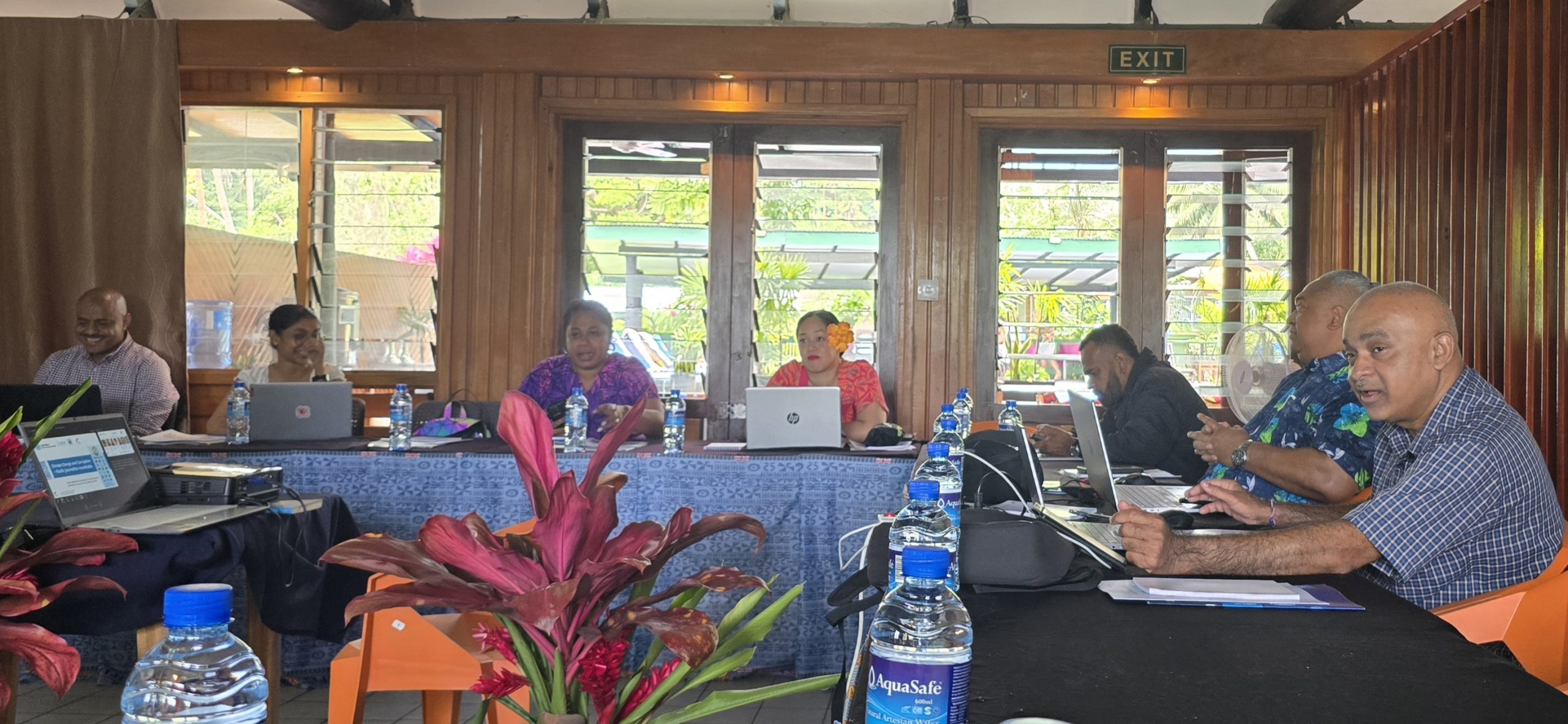
SAVUSAVU, Fiji — Pacific journalists gathered at the Daku Resort in Savusavu on Monday to address the growing risks of corruption in climate finance and disaster relief across the region.
The “Climate Change and Corruption” roundtable, held Sept. 21 as a pre-summit dialogue ahead of the 8th Pacific Media Summit, was organized by the Pacific Islands News Association (PINA), the Pacific Anti-Corruption Journalists Network (PACJN), and the United Nations Office on Drugs and Crime (UNODC).
Media professionals and anti-corruption experts highlighted how fast-moving adaptation funds, complex carbon credit calculations, and emergency procurement rules after natural disasters create prime opportunities for corruption. Panelists—including Island Times Editor Leilani Reklai, Fiji Media Association’s Anish Chand, Fiji Sun’s Ivamere Nataro, and Journalists Association of Samoa’s Adel Fruean—shared published investigations and techniques for exposing governance failures.
Key investigative strategies discussed included tracking beneficial ownership, utilizing satellite imaging to verify land-use claims, cross-referencing carbon credit registries, and prioritizing direct field visits to local communities over official statements.
The workshop also featured UNODC’s new Pacific Integrity Toolkit for Disaster Planning, presented by UNODC Pacific Head of Office Marie Pegie Cauchois. The toolkit demonstrates how to integrate transparency and accountability safeguards into national disaster preparedness systems. Additional sessions examined how corruption during climate shocks disproportionately harms women, persons with disabilities, and marginalized groups.
Supported by New Zealand’s Ministry of Foreign Affairs and Trade (NZ MFAT) under a 2026 initiative, the training aims to equip Pacific journalists to hold leaders accountable to international anti-corruption commitments, such as the Teieniwa Vision and UNCAC Resolution 11/9.